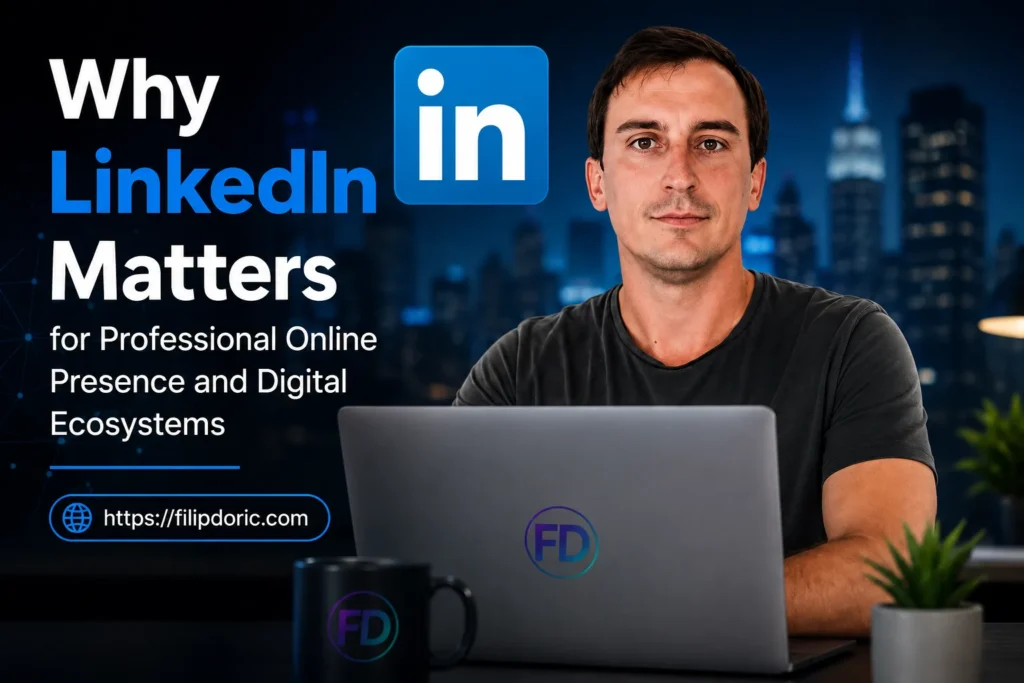
Why LinkedIn matters is something I have been thinking about more and more over the past year.
For a long time, I viewed LinkedIn mainly as a place for job seekers.
A platform where people uploaded their resumes, connected with colleagues, and searched for new career opportunities.
Today, I see something much bigger.
LinkedIn has become one of the most important platforms for anyone building a professional online presence.
Not because it is the biggest social network.
But because of the type of conversations that happen there.
More Than a Place to Find a Job
LinkedIn was founded in 2003 by Reid Hoffman and a small team of entrepreneurs who believed professionals needed their own online network.
The early years were modest.
Growth was slow.
The platform focused on helping people build professional connections rather than attracting millions of casual users.
Over time, LinkedIn introduced features that changed its direction.
Professional groups.
Job listings.
Premium memberships.
Recruitment tools.
Content publishing.
Learning resources.
One milestone changed everything.
In 2016, Microsoft acquired LinkedIn for $26.2 billion, one of the largest technology acquisitions in history.
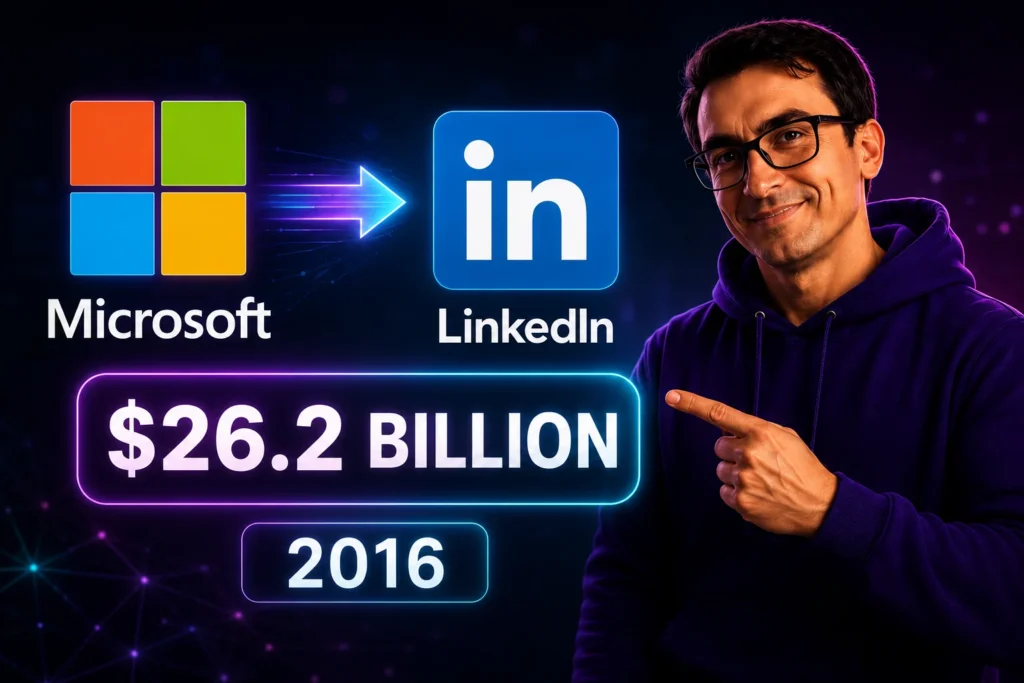
Rather than changing the platform completely, Microsoft helped expand it.
Today LinkedIn is deeply integrated with Microsoft’s ecosystem while continuing to operate as its own professional network.
That investment helped transform LinkedIn from a digital resume into a complete business platform.
Professional Content Has Become an Asset
One of the reasons why LinkedIn matters today is the shift toward content.
People no longer visit LinkedIn only to search for jobs.
They come to:
- learn
- discover ideas
- build authority
- find partners
- connect with professionals
- follow creators
- subscribe to newsletters
That changes everything.
Because every useful post becomes part of your professional reputation.
Unlike entertainment-first platforms, LinkedIn often rewards thoughtful content.
Consistency.
Experience.
Practical knowledge.
Those qualities fit naturally with the way I like to create content.
My Own Experience
I still spend considerably more time on Facebook than on LinkedIn.
Facebook has been my primary platform for years.
It combines communities, pages, messaging, videos, and different types of content in one place.
But over the past months, I have started publishing more consistently on LinkedIn.
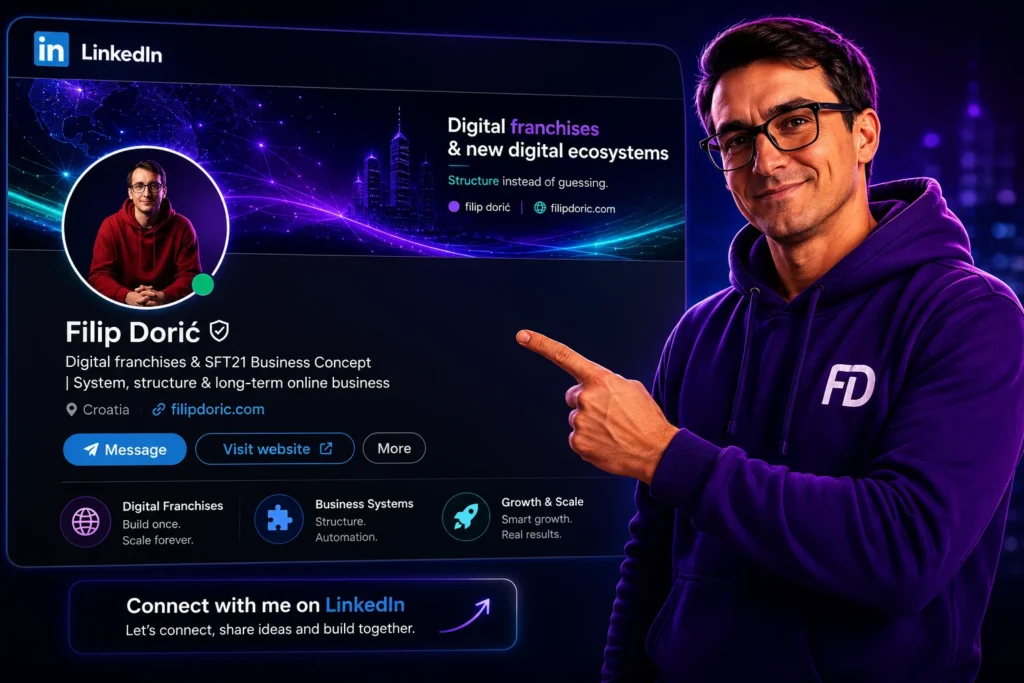
Both in English and Croatian.
The conversations feel different.
People often respond with thoughtful questions.
Some reach out privately.
Others are looking for collaborations or simply want to exchange ideas.
It reminds me that different platforms attract different intentions.
That is why I no longer think about social media as competitors.
I think about them as different parts of a larger system.
Choosing the Right Platform
One mistake many beginners make is trying to build an audience everywhere.
Facebook.
Instagram.
LinkedIn.
Pinterest.
X.
TikTok.
YouTube.
That usually leads to frustration.
Creating quality content takes time.
Building trust takes even longer.
Instead of trying to dominate every platform, I believe it is far more effective to choose the ones that naturally fit your goals.
If your work depends on professional relationships, consulting, education, B2B services, freelancing, coaching, or digital products, LinkedIn deserves serious consideration.
Not because everyone else is using it.
Because the audience is already thinking about business.
LinkedIn and Artificial Intelligence
Another reason why LinkedIn matters is artificial intelligence.
Professional content is becoming increasingly visible beyond the platform itself.
AI assistants are constantly looking for reliable professional sources.
Thoughtful articles.
Industry insights.
Expert discussions.
LinkedIn increasingly becomes part of that broader knowledge ecosystem.
This creates an interesting opportunity.
Your content is no longer written only for your followers.
It may also help answer questions through AI-powered search experiences.
That makes quality even more valuable.
Organic Marketing Still Matters
LinkedIn also offers advertising.
Sponsored posts.
Lead generation campaigns.
Recruitment advertising.
Those tools certainly have their place.
But my philosophy remains the same.
Start with organic marketing.
Learn how people respond.
Build credibility.
Develop your voice.
Only then consider expanding through paid promotion.
Strong organic foundations often outperform expensive campaigns that lack trust.
LinkedIn Inside a Digital Ecosystem
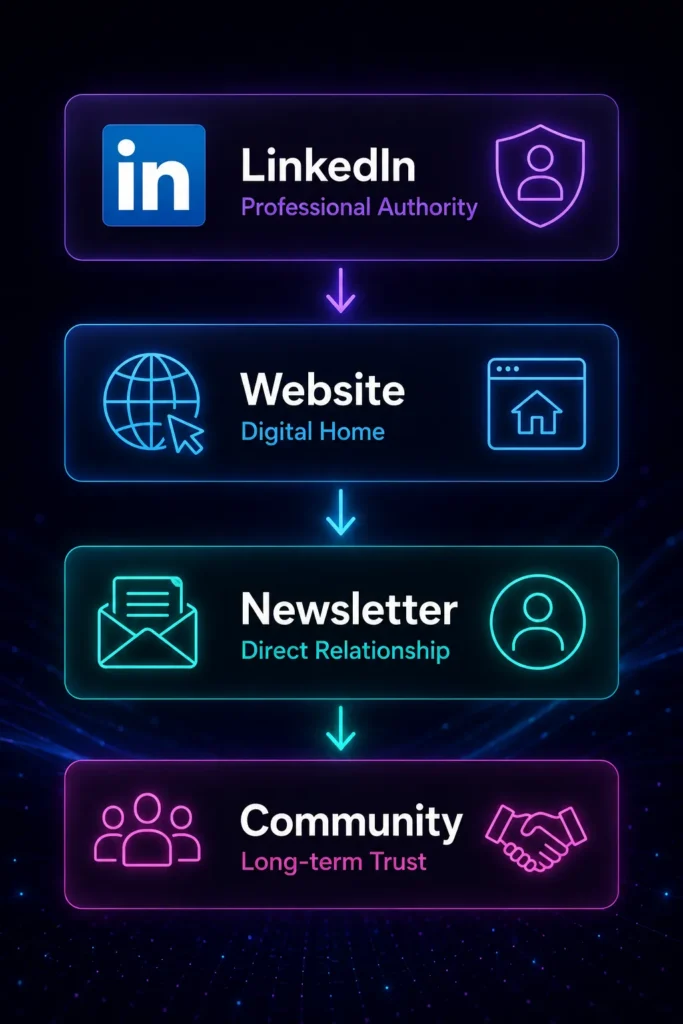
When I look at today’s online landscape, I rarely think about platforms individually.
Instead, I think about how they connect.
For example:
LinkedIn = Professional Authority
Facebook = Community
X = Real-Time Conversation
Pinterest = Discovery
Website = Ownership
Newsletter = Relationship
Each platform solves a different problem.
Each strengthens the others.
That is one reason I have become increasingly interested in digital ecosystems rather than isolated marketing channels.
Final Thoughts
So, why LinkedIn matters is no longer just a question about finding a job.
It is a question about visibility.
Credibility.
Professional relationships.
Long-term positioning.
LinkedIn will not be the right platform for every business.
But if you are building expertise, offering services, creating educational content, or growing a professional brand, it is one platform I believe deserves serious attention.
Not because it promises overnight success.
Because it rewards consistency, expertise, and meaningful conversations.
And those qualities rarely go out of style.
Want to Go One Step Further?
Lately, I have been exploring business concepts that combine social networking, ecommerce, websites, newsletters, and digital infrastructure into one connected ecosystem.
The more I study platforms like LinkedIn, Facebook, Pinterest, X, and modern AI tools, the more convinced I become that long-term success comes from building systems rather than depending on a single platform.
If this topic interests you, subscribe to my newsletter below.
As a thank-you, you’ll receive my free PDF:
Free Inbox Framework: Turn “I’m Interested” Into Real Conversations (No Pitching)
Inside, I share a simple framework I personally use to guide conversations naturally, build trust, and create stronger online relationships.
No hype.
No pressure.
Just practical ideas you can start using right away.
📬 Want more tips like this?
Subscribe to get fresh blog posts directly to your inbox.