Understanding SFlicense vs Starter Packages is important before you start comparing prices, SF points, SF codes, bonus structures, or future earning limits inside the SFT21 Business Concept.
At first glance, both may look like different ways to enter the same system.
But they are not designed for the same stage of the project and they do not serve the same purpose.
The simplest distinction is this:
SFlicense belongs to the current pre-launch development phase.
Starter Packages are designed for active franchise business after the full SFT21 ecosystem launches.
That difference changes everything.
This article is not meant to become another page full of numbers without context.
Before comparing prices, it is much more important to understand:
What are you buying?
Why does it exist?
What rights come with it?
And what role do you actually want inside the SFT21 ecosystem?
First, Understand the Bigger SFT21 Business Concept
The SFT21 Business Concept is not being developed simply as a package-based compensation system.
The broader idea is to connect different participants inside one digital ecosystem through:
SFoffice – the business dashboard and operational environment
SFnet – the verified social network and community layer
SFshop – the ecommerce and marketplace environment
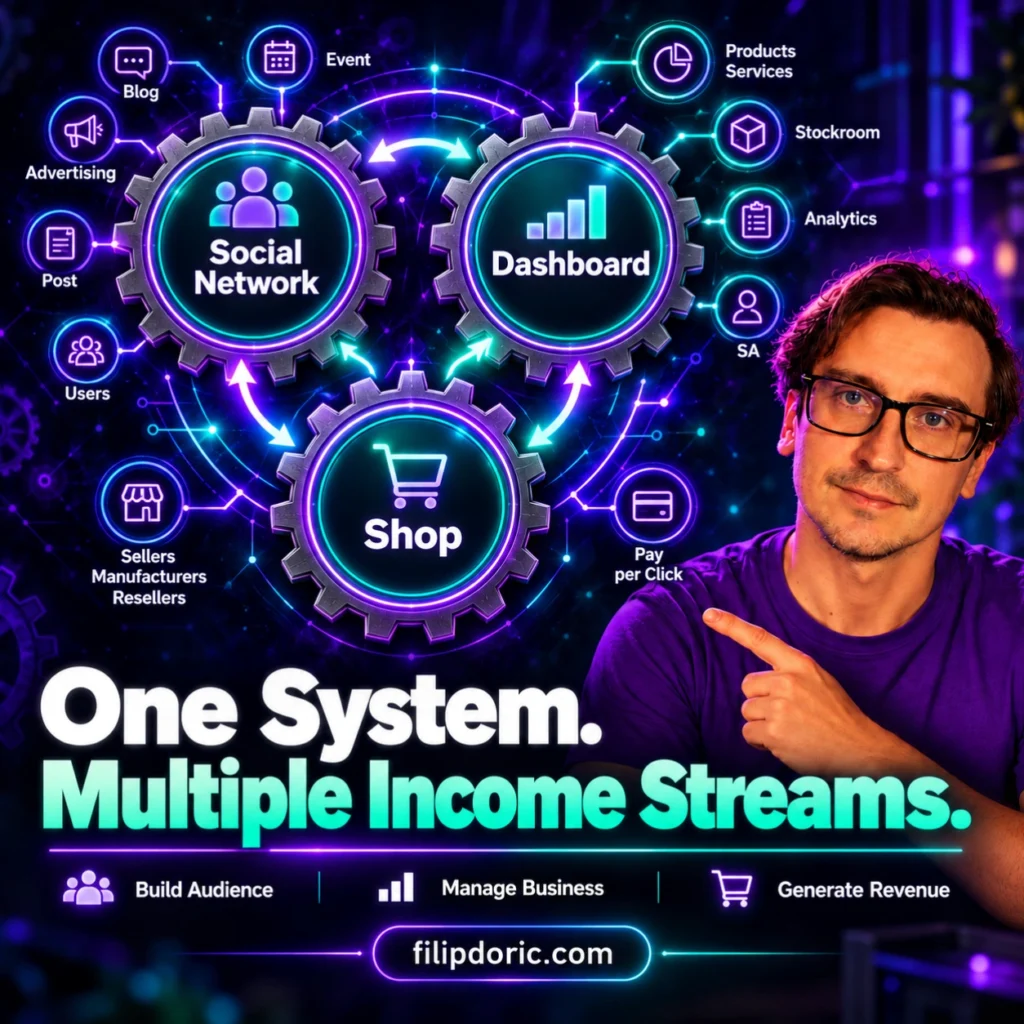
Around those platforms, the wider concept is intended to connect:
customers,
business owners,
producers,
service providers,
entrepreneurs,
franchise partners,
and ordinary users.
That distinction matters because not everyone using the ecosystem will need to become a franchisee.
Someone may simply register on SFnet.
Someone may use SFshop as a customer.
A business owner may eventually want to present products or services.
Someone else may want to actively build a franchise position.
So before asking:
“Which package should I buy?”
I think a better first question is:
“What role do I actually want inside this ecosystem?”
Why Do SFlicense Packages Exist Today?
SFT21 is still in its development and pre-launch phase.
According to the current company structure, funds generated through the sale of License Packages are being used to support development of the core software, the full franchise infrastructure, SFshop, SFnet, and the wider business system.
That context is important.
When you purchase an SFlicense today, you are not entering a franchise operation that is already fully launched commercially.
You are purchasing a digital product during the development phase of the project.
That product comes with rights defined by the License Purchase Agreement.
This is why I would not describe SFlicense simply as:
“a ticket into the business.”
It has a specific purpose in the current phase.
And it is also a time-limited offer.
Once the project moves into the full franchise stage, the company plans to stop direct sales of new License Packages and move to the Starter Package structure.
What Exactly Is an SFlicense?
An SFlicense is a digital product obtained through the purchase of one of the currently available License Packages.
It is important to be precise here.
Buying an SFlicense does not mean buying shares in SFT21 LLC.
It does not make you an owner of the company.
It is not presented as a stock, security, or ownership interest.
You are purchasing a digital product that gives you specific rights within the SFT21 ecosystem.
That distinction is important because phrases such as:
“being part of the project”
can mean very different things to different people.
An SFlicense holder is not a co-owner of SFT21 LLC.
The license holder owns the SFlicense digital product and the rights connected with that license.
What Rights Come With an SFlicense?
I find it easiest to divide those rights into two groups:
long-term license rights
and
a limited bonus-program right.
Long-Term Rights
According to the current model, an SFlicense can include rights such as:
access to the user account and available ecosystem tools,
the possibility of later upgrading into active franchise status,
and the ability to transfer the license or certain user accounts under the applicable company rules.
The number of user accounts connected with the license depends on the License Package selected.
Current License Packages range from lower-level packages with fewer accounts to higher packages with more accounts.
I am intentionally not repeating the complete current License Package table here.
Those numbers are easier to maintain on a dedicated page.
There you can compare the current package structure, SF points, SF codes, account allocation, and the other details that may change over time.
The purpose of this article is different.
I want this page to remain an evergreen explanation of the difference between SFlicense and future Starter Packages.
SFlicense Can Later Be Upgraded to Active Franchise Status
This is one of the most important parts of the current License Phase.
An SFlicense holder does not automatically need to operate as an active franchise partner today.
The license can remain in a passive status.
Later, according to the current structure, the holder can choose to upgrade the license account into active franchise status without purchasing a new Starter Package.
At that point, the person accepts the Franchise Agreement and the work obligations that come with active franchise participation.
This is important because it separates:
owning the license
from
actively operating the franchise business.
Those are not the same position.
Does Buying an SFlicense Mean You Must Build a Team?
No.
Buying an SFlicense during the current License Phase does not automatically mean that you must:
build a team,
actively promote the business,
or perform the future work obligations of an active franchisee.
There are voluntary activities that can affect positioning before the system fully launches, but those should not be confused with the formal work obligations that will apply to active franchise partners later.
That is one of the practical differences between the current license holder and the future active franchise participant.
A license can be held passively.
An active franchise position comes with active participation.
What Is the SFlicense Bonus Program?
SFlicense holders also have access to a bonus structure connected specifically with the License Phase.
Under the current model, license holders can participate in Bonus Phase 1 and Bonus Phase 2 until the maximum total bonus connected with their License Package is reached.
There is an important distinction here.
Having the right to participate in a bonus program is not the same thing as receiving a guaranteed bonus within a guaranteed timeframe.
The company states that bonus realization depends on the future commercial performance of the ecosystem.
That means the actual business still matters.
Users need to participate.
SFshop needs transactions.
Business partners need to exist.
Products and services need activity.
The wider ecosystem needs to operate successfully.
A projected bonus is therefore not something I would look at in isolation.
I would always ask:
What business activity is expected to generate the funds behind it?
That question matters much more than a large number in a table.
Before Buying an SFlicense, Read the Agreement
This is something I strongly recommend.
Do not make a decision based only on:
a Facebook post,
my article,
a YouTube video,
or a private message.
Use those things to understand the context.
Then read the document that actually defines what you are buying.
The SFT21 License Purchase Agreement explains the rights, conditions, bonus structure, transfer rules, and other parts of the License Phase.
I have also published a detailed video analysis of the agreement.
SFlicense Agreement Analysis
In that analysis, I go through the most important sections and explain the terms in a more practical way.
The agreement itself remains the primary document.
My analysis is there to help you understand it.
Discover What Each SFlicense Package Offers
If you are currently researching the License Phase, I also have a separate overview of the available packages.
Discover what each SFlicense package offers.
See the available SF points, SF codes, account structure, bonus potential, and your position inside the wider SFT21 system.
Explore Current SFlicense Packages:
Because SFlicenses belong specifically to the current development stage, remember that this is a time-limited phase.
The package structure available today is not intended to remain the normal entry model after the full franchise system launches.
And that brings us to Starter Packages.
What Are Starter Packages?
Starter Packages are designed for the active franchise phase of the SFT21 Business Concept.
They are not simply the future version of today’s License Packages.
They have a different function.
A Starter Package is designed as an activation module for an active franchise business account.
It determines things such as:
the number of subscription periods covered,
SF points,
SF codes,
and the starting business structure associated with the selected package.
So while an SFlicense belongs to the development phase and carries license rights, a Starter Package is intended to activate a person inside the fully launched franchise system.
That is the fundamental distinction.
Starter Packages Are Not Available Yet
At the time of writing, Starter Packages cannot be purchased.
They are intended to become available after the full SFT21 Business Concept and franchise infrastructure launch.
Under the current structure, that transition also marks the end of direct company sales of new License Packages.
So after launch, the choice is not expected to look like:
“Would you like a License Package or a Starter Package?”
The model is structured by phase.
Today
License Packages
After the full franchise launch
Starter Packages
That is why I think SFlicense vs Starter Packages should be understood as a comparison between two stages of the business concept, not simply two products sitting next to each other.
Current Starter Package Structure
According to the currently presented structure, SFT21 plans seven Starter Packages.
| Starter Package | Package Value | Subscription Periods | SF Points | SF Codes |
|---|---|---|---|---|
| SP1 | €50 | 1 | 50 | 1 |
| SP2 | €200 | 4 | 200 | 4 |
| SP3 | €350 | 7 | 350 | 7 |
| SP4 | €500 | 10 | 500 | 10 |
| SP5 | €650 | 13 | 650 | 13 |
| SP6 | €1,050 | 17 | 1,050 | 17 |
| SP7 | €1,450 | 21 | 1,450 | 21 |
This table is much easier to understand than describing all seven packages separately.
The principle is straightforward:
higher Starter Packages cover more subscription periods and include more SF points and SF codes from the beginning.
What Does the Full SFT21 Franchise Cost?
Under the currently presented model, the full franchise structure totals €1,500.
That consists of:
€50 registration
plus
€1,450 representing 21 subscription periods.
Those 21 periods are important because they define the transition to full SFfranchiser status.
But this does not mean everyone entering after launch will necessarily need to pay the full €1,450 Starter Package amount immediately.
Do You Need to Start With SP7?
No.
This is one of the useful parts of the planned structure.
SP7 covers all 21 subscription periods at once.
But someone entering through a lower Starter Package can begin with fewer periods and later complete the remaining subscription periods according to the rules of the active franchise system.
That allows someone to start at a lower level, understand the system, build activity, and progress toward the full franchise position.
Once all 21 subscription periods are completed, the user reaches full SFfranchiser status.
That leads to another important distinction.
SFstarter and SFfranchiser Are Not the Same
These two terms can easily be mixed up.
SFstarter
An SFstarter is an active participant who has entered the franchise business through a Starter Package but has not yet completed all 21 subscription periods.
SFfranchiser
An SFfranchiser has completed all 21 subscription periods.
That can happen by entering directly through SP7 or by starting with a lower Starter Package and later completing the remaining periods.
This means your initial Starter Package does not necessarily define your permanent position.
You can begin smaller and later progress toward the full franchise status.
Why Don’t Starter Packages Include the SFlicense Bonus Program?
Because Starter Packages do not exist for the same reason as SFlicenses.
The SFlicense bonus program belongs specifically to the License Phase and the rights connected with the License Purchase Agreement.
Starter Packages come later.
Their purpose is to activate active franchise participation inside a system that is already launched.
That means Starter Package users do not enter Bonus Phase 1 and Bonus Phase 2 simply because they purchased a Starter Package.
Instead, active franchise participants earn according to the active business rules and compensation structure applicable after launch.
That includes different types of business bonuses and the wider SFalgorithm structure.
I have already written separately about the SFalgorithm and how the wider distribution system is designed.
[INTERNAL LINK: How the SFalgorithm Works: Coming Soon]
There is no need to explain that entire structure again inside this article.
SFlicense vs Starter Packages: The Core Difference
If I had to summarize the difference in one sentence:
SFlicense represents rights and position during the development phase. Starter Packages activate active franchise business after launch.
That is the key.
The SFlicense can exist without active franchise work.
The Starter Package exists specifically for active business participation.
The SFlicense holder may later choose to activate.
The Starter Package user enters directly into an active business role.
This distinction is much more important than comparing prices alone.
License Phase vs Active Franchise Phase
Here is the comparison in a simple table.
| Feature | SFlicense / License Packages | Starter Packages |
|---|---|---|
| Project stage | Before full franchise launch | After full franchise launch |
| Available now | Yes | No |
| Primary purpose | Support development + obtain SFlicense rights | Activate active franchise business |
| Active franchise work required immediately | No | Yes |
| Bonus Phase 1 & 2 | Yes, according to license conditions | No |
| Can later become active franchise status | Yes | Already entering active business |
| SF points | Yes | Yes |
| SF codes | Yes | Yes |
| Franchise Agreement | Signed when activating active status | Required for active business |
| Direct availability after full launch | New direct sales planned to end | Becomes available |
| Time-limited phase | Yes | Future standard active-entry model |
If you understand this table, you already understand most of the SFlicense vs Starter Packages difference.
The SFlicense Is a Position – the Franchise Is Active Business
Another simple way to think about it is this:
SFlicense = rights and position
Active franchise = business activity
Someone may buy an SFlicense during the development phase and remain a passive license holder.
Someone else may already know that once the franchise launches, they want to become active.
When an SFlicense holder later upgrades into active franchise status, that person accepts the Franchise Agreement and the obligations connected with active participation.
The existing license rights remain relevant, while the person also moves into the active business structure.
That possibility is one of the reasons the current License Phase is different from simply waiting for future Starter Packages.
What Does an Active Franchise Partner Actually Do?
This deserves its own article.
And I will publish a dedicated English explanation of the work obligations and practical activities of SFT21 franchise partners.
For now, the important thing to understand is that active franchise participation is not:
“buy a package and wait.”
Active SFstarters and SFfranchisers are expected to participate in building the ecosystem.
That can include areas such as:
communication,
content,
community development,
introducing new users,
connecting potential business partners,
supporting SFnet growth,
supporting SFshop activity,
product visibility,
and other defined franchise activities.
I also have a detailed webinar about the work obligations, although that webinar is currently in Croatian.
Franchise Work Obligations Webinar – Croatian
Later, once the dedicated English article is published, I will link it here:
[FUTURE INTERNAL LINK: SFT21 Franchise Work Obligations Explained: Article Coming Soon]
What If You Only Want to Use SFnet or SFshop?
You may not need a franchise position at all.
This is something I think people sometimes overlook.
The wider SFT21 ecosystem is being designed for multiple types of users.
After full launch, the current concept includes free registration for regular SFnet and SFshop users.
Someone may simply want to use the social network.
Another person may want to shop.
A business may want to offer products or services.
Someone else may want to actively participate in the franchise business.
These are different roles.
And that is exactly why I keep using the word:
ecosystem.
A functioning ecosystem does not need everyone to do the same thing.
A customer can remain a customer.
A producer can remain a producer.
A business owner can use business tools.
A franchise partner can develop business activity.
The value comes from connecting those roles.
Why the Current License Phase Is Different
The current License Phase gives people the option to participate before the full commercial franchise system launches.
That comes with advantages that are connected specifically with this phase.
But it also comes with something that should not be ignored:
the ecosystem is still being built.
You are not evaluating a mature platform that has already operated commercially for years.
You are evaluating:
the concept,
the development,
the legal agreements,
the software progress,
the company structure,
and what the model is intended to become after launch.
Some people are comfortable participating at that stage.
Others are not.
That is completely reasonable.
What If You Prefer to Wait for Starter Packages?
Then wait.
There is nothing wrong with that decision.
Some people will prefer to see the complete platforms first.
They may want to:
see SFoffice,
use SFnet,
explore SFshop,
observe real market activity,
and only then decide whether active franchise participation makes sense for them.
If that describes you, there is no reason for me to convince you otherwise.
You can simply follow the project.
Join my newsletter.
Watch the development.
And when Starter Packages become available, you can evaluate the system at that stage.
[CTA: Join My Newsletter for SFT21 Launch Updates]
That is a perfectly valid approach.
What If You Are Interested in the Current SFlicense Phase?
Then the process is different.
Because the License Phase is time-limited, I would first understand:
what the license is,
what rights it gives,
what the package includes,
what the agreement says,
how the bonus program is structured,
and what happens when the full franchise system launches.
Then compare the available License Packages.
Explore Current SFT21 License Packages
Discover what each SFlicense package offers.
See the available SF points, SF codes, account structure, bonus potential, and your position within the SFT21 system.
Then decide whether participating during this development phase makes sense for you.
Licenses and Starter Packages Should Not Be Compared Only by Price
This is probably one of the biggest mistakes someone could make.
Imagine looking only at:
€X today
versus
€Y later.
You could easily miss the entire difference.
The two products belong to different phases and different roles.
SFlicense provides rights connected with the development stage.
Starter Packages are designed to activate active franchise business after launch.
That is why the better question is not:
“Which one is cheaper?”
or even:
“Which one is better?”
The better question is:
“At what stage am I entering, and what do I want to do?”
That is much more useful.
Which One Is Better?
There is no universal answer.
Today, you cannot purchase a Starter Package because that phase has not started.
The current available option is the License Phase.
SFlicense includes rights that future Starter Packages will not include in the same way, particularly access to the license-specific bonus program and the ability to later activate franchise status from the license position.
Starter Packages, on the other hand, are designed for people entering after launch who want to begin active franchise business.
So I would not reduce the decision to:
better vs worse.
I would reduce it to:
development-stage position vs post-launch active business.
The Most Important Question Before You Decide
Ask yourself:
Do I want to participate during the current development phase?
Or:
Would I rather wait until the entire ecosystem is launched and then evaluate active franchise participation through Starter Packages?
Those are both legitimate positions.
Someone may want to enter early.
Someone may prefer completed platforms.
Someone may want to remain only a user.
Another may want to become a producer or business partner.
Someone else may want to actively build as a franchise partner.
The ecosystem is being designed around different roles.
That is important.
SFlicense vs Starter Packages: Final Summary
The SFlicense vs Starter Packages comparison becomes much easier once you stop treating them as two packages competing for the same customer at the same moment.
They belong to different stages of the SFT21 Business Concept.
SFlicense
An SFlicense belongs to the current development phase.
You purchase a digital product with defined rights.
You are not automatically required to perform active franchise work.
You can later choose to upgrade your license account into active franchise status.
The license includes access to the license-specific bonus structure according to its terms.
And the current License Phase is a time-limited offer.
Starter Package
Starter Packages belong to the post-launch franchise phase.
They are designed to activate an account for active franchise business.
They determine the number of subscription periods covered, SF points, SF codes, and the participant’s initial franchise structure.
Once all 21 subscription periods are completed, the participant reaches full SFfranchiser status.
That is the difference.
SFlicense belongs to the building phase.
Starter Packages belong to the active franchise phase.
Today, License Packages are available.
Starter Packages are planned for the full franchise launch.
And whichever direction interests you, I recommend the same approach:
information first, decision second.
Read.
Watch.
Ask questions.
Study the agreement.
Understand what you are buying.
Then make your own decision.
Want to Understand the License Phase in More Detail?
If you are currently considering an SFlicense, start with my full License Package overview:
Explore Current SFT21 License Packages: https://www.youtube.com/watch?v=ECa6CnrskC8
Discover what each SFlicense package offers.
Compare the available SF points, SF codes, user accounts, bonus structure, and other current package details.
You can also watch complete License Agreement analysis below:
And if you prefer to wait until the full franchise system launches and Starter Packages become available, join my newsletter.
I will continue sharing updates about:
SFoffice, SFnet, SFshop, Starter Packages, franchise development, and the wider SFT21 Business Concept.
No pressure.
No need to make a decision before you understand what you are looking at.
Information first. Decision second.
📬 Want more tips like this?
Subscribe to get fresh blog posts directly to your inbox.