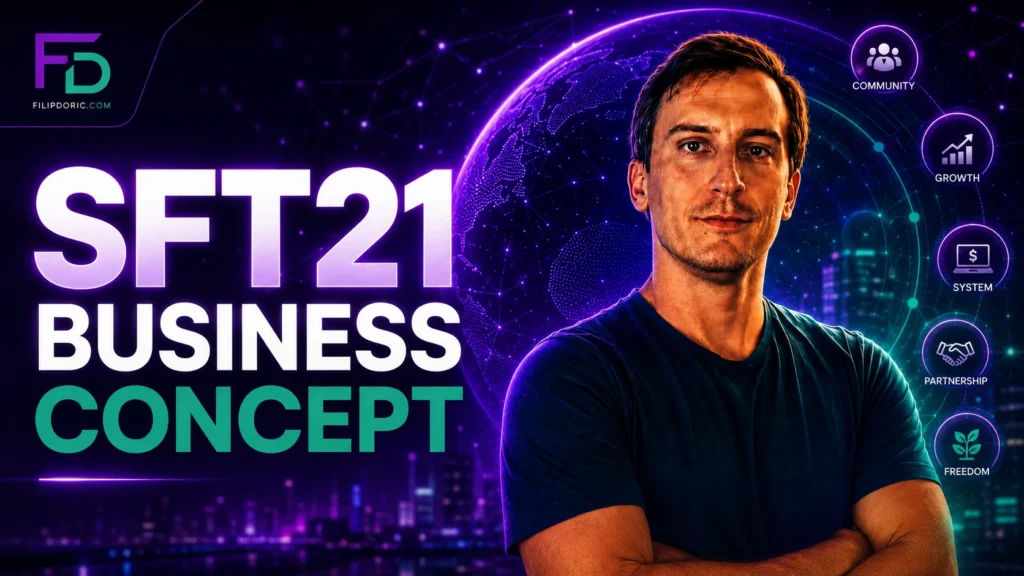
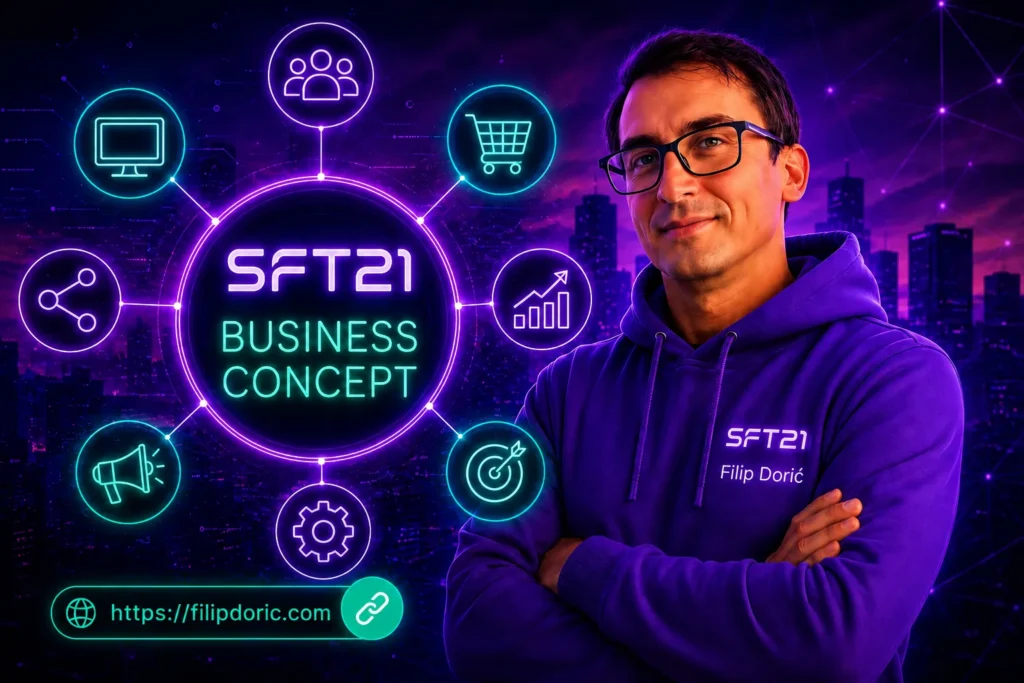
If you have been following my content for a while, you have probably seen me mention the SFT21 Business Concept more than once.
Digital ecosystems.
Digital franchise.
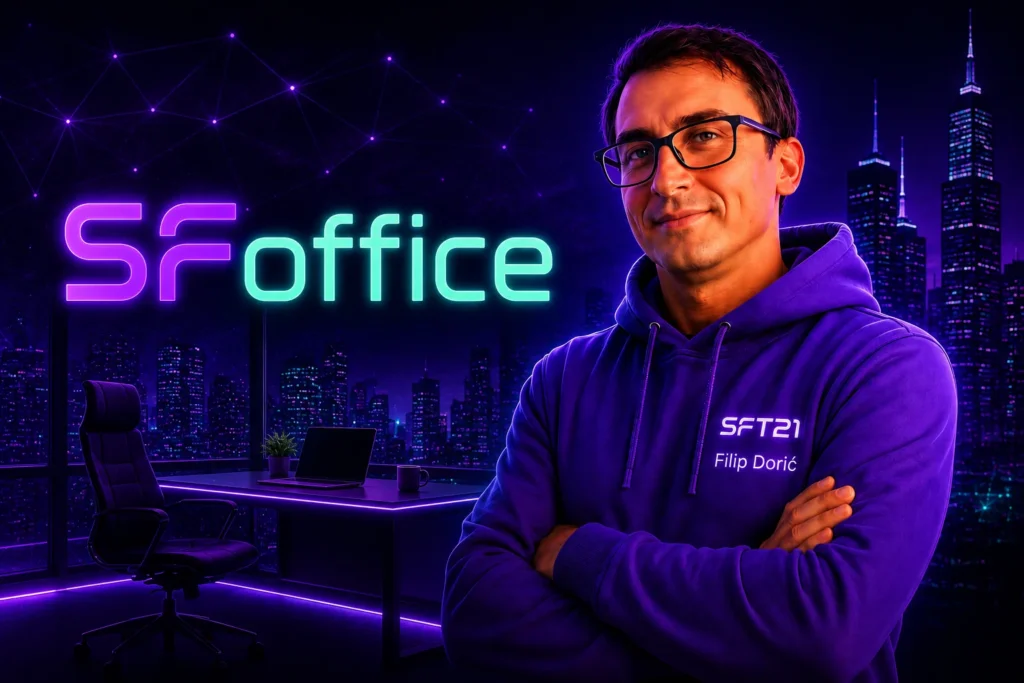
SFoffice.
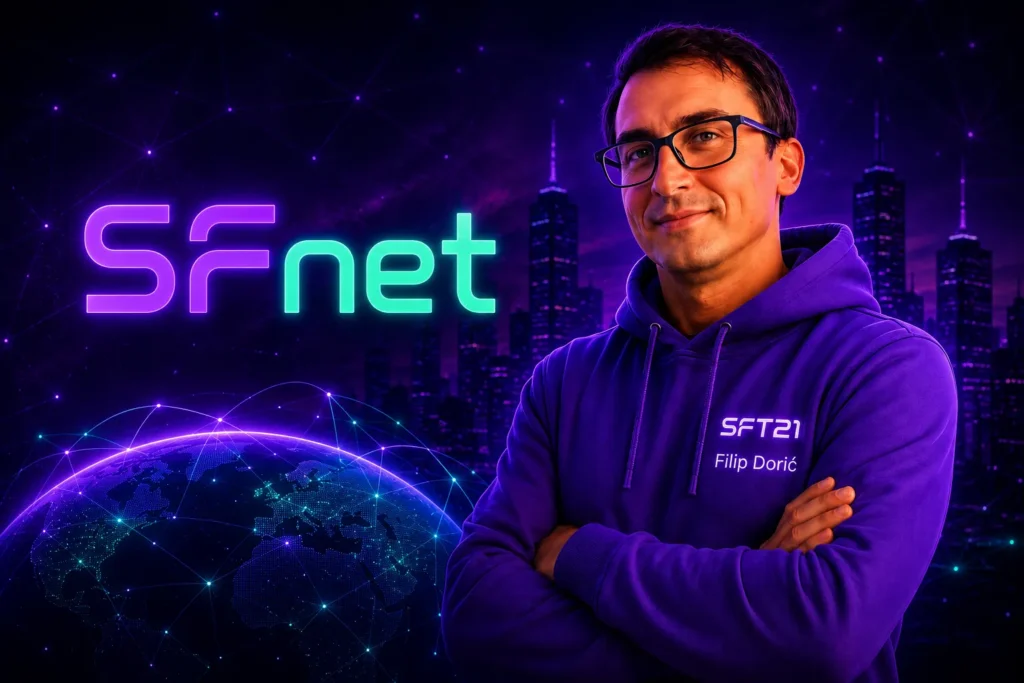
SFnet.
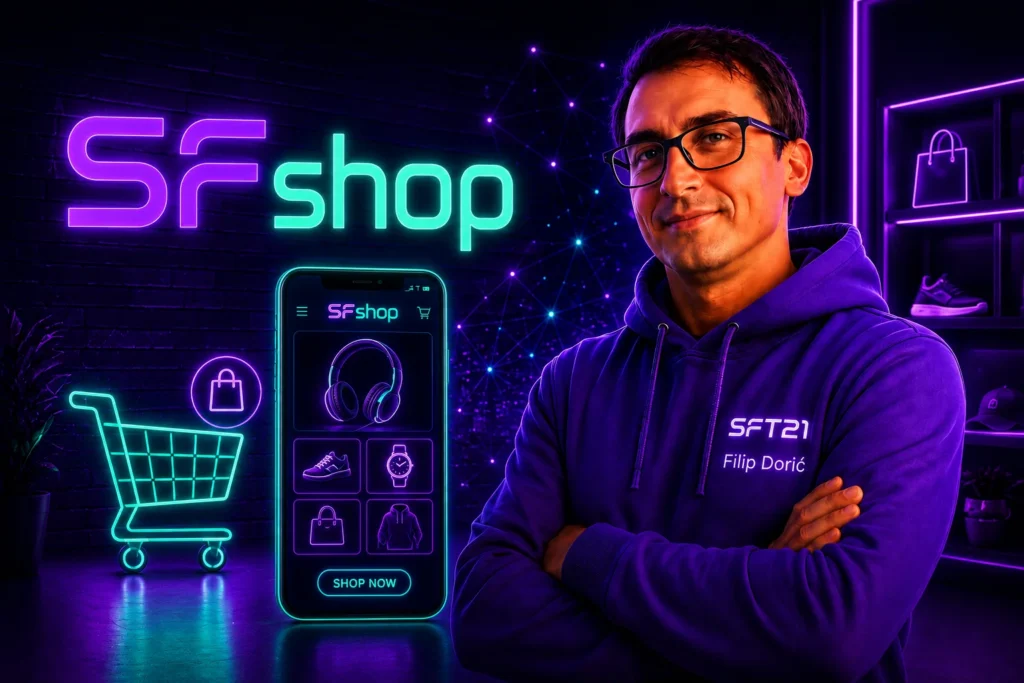
SFshop.
Licenses.
Community.
Pre-launch.
And perhaps you have thought:
Okay, Filip. But what exactly is SFT21 Business Concept?
Fair question.
This article is for you.
Not for someone who already understands every detail of the compensation structure.
Not for someone comparing license packages.
Not for someone trying to calculate bonuses.
This is the starting point.
My goal is simple.
By the time you reach the end, I want you to be able to say:
“Okay. Now I finally understand what Filip has been talking about.”
So let us begin from the beginning.
What Is the SFT21 Business Concept?
The SFT21 Business Concept is a developing digital business ecosystem built around the idea of connecting several parts of online activity inside one wider structure.
The project is being developed by SFT21 LLC, a company registered in Delaware, United States.
Around the project is also a growing international community called SFteam — Semper Fidelis Team.
SFteam is not another platform inside the ecosystem. It is the community of people who are already following, supporting, studying, and helping build the project during its early development stage.
That distinction is useful from the beginning:
SFT21 LLC is the company behind the business concept. SFteam is the community growing around it. SFoffice, SFnet and SFshop are the main digital components of the ecosystem.
The ecosystem is also backed by a unique profit distribution model, with 81.724% of the company’s distributable profit intended for the community according to the current SFT21 business structure.
That makes the economic model an important part of the wider ecosystem — not just the technology itself.
Instead of treating social networking, ecommerce, business tools, community, and digital entrepreneurship as completely separate things, the concept aims to connect them.
At the centre of that structure are three main digital components:
SFoffice – the business and account dashboard
SFnet – the social and community layer
SFshop – the ecommerce and marketplace layer
Around those components sits the wider digital franchise structure.
That is why I usually do not describe SFT21 Business Concept as simply:
another social network,
another webshop,
another affiliate program,
or another online business opportunity.
The idea is broader.
It is about building a connected digital ecosystem.
What Is a Digital Ecosystem?
This term can sound more complicated than it really is.
A digital ecosystem is simply a group of digital components that are designed to work together.
But when they are connected, something different happens.
A social media post can bring someone to your website.
Your website can introduce a product.
A visitor can join your newsletter.
The newsletter can bring that person back.
A customer may later join your community.
The community can create new conversations, recommendations, and business relationships.
Now you are no longer using isolated tools.
You are creating a system.
That is the basic idea behind digital ecosystem thinking.
I have written more about this separately, but for now you only need to understand one principle:
The value is not only in the individual parts. The value is also in how those parts connect.
Where Does the “Digital Franchise” Part Come In?
This is the next important piece.
You can build your own digital ecosystem.
Many entrepreneurs already do.
You create a website.
Choose your email platform.
Build your social audience.
Create products.
Find ecommerce software.
Set up payment systems.
Build a community.
Connect everything yourself.
That gives you control.
But it also takes time.
The other approach is to participate inside a structure where much of that infrastructure is already being developed.
That is where the idea of a digital franchise enters the SFT21 Business Concept.
The participant does not need to invent the entire ecosystem from zero.
The company develops the wider infrastructure.
The individual participates within that structure according to a defined role.
That distinction is important.
You are not simply buying access to another application.
You are entering a business system with its own tools, rules, community, roles, and development model.
What Is SFoffice?
Think of SFoffice as the business dashboard.
This is the part of the ecosystem connected with managing your account and your position inside the system.
Instead of needing several unrelated services for different parts of the business relationship, the idea is to provide one central business environment.
Depending on the stage of development and the role of the user, that environment is intended to connect things such as account information, participation, business activity, and other ecosystem functions.
For a beginner, the easiest way to remember it is:
SFoffice = your business side of the ecosystem.
What Is SFnet?
SFnet is the social layer.
But the idea is not simply to create another Facebook clone.
The concept has been presented around a verified community.
Real users.
Connected profiles.
Interaction.
Content.
Business relationships.
Community development.
This matters to me because social networks have become one of the most important parts of the modern internet.
We discover people there.
We communicate.
Build trust.
Share content.
Find products.
Learn.
But most existing social platforms are separate from the business infrastructure around them.
SFT21 LLC is attempting to place social interaction inside the wider ecosystem.
The simple version is:
SFnet = the social and community side.
What Is SFshop?
Then we have SFshop.
This is the ecommerce layer.
A digital ecosystem becomes much more interesting when it does not only connect people but also allows economic activity to happen inside that environment.
Products need customers.
Producers need visibility.
Customers need a place to discover products.
Entrepreneurs need markets.
That is why ecommerce is an important part of the wider concept.
The long-term idea is not only about online marketers selling digital offers to other online marketers.
It also creates a potential connection with:
physical products
producers
small businesses
entrepreneurs
customers
different markets
The easiest way to remember this part:
SFshop = the ecommerce and marketplace side of the ecosystem.
Put the Three Together
Now the picture becomes easier.
SFoffice Business infrastructure.
SFnet Social interaction and community.
SFshop Commerce and marketplace.
Three separate components.
One wider ecosystem.
And around that sits the digital franchise model.
This is the part many people miss when they first encounter SFT21 Business Concept.
They see one detail.
Perhaps the license.
Perhaps the compensation structure.
Perhaps the social network.
Perhaps the webshop.
And then they try to define the entire project based on that single piece.
But one piece is not the whole picture.
And around these digital components are two other important layers: the company developing the system, SFT21 LLC, and the international SFteam community growing alongside it.
Technology is one part of the story.
The people building and using it are another.
Is SFT21 Business Concept Affiliate Marketing?
Not exactly.
Affiliate marketing can exist inside a wider digital business structure.
But traditional affiliate marketing normally works like this:
You recommend someone else’s product.
Someone purchases through your link.
You receive a commission.
Simple.
I still use affiliate marketing myself.
There is nothing wrong with that model.
But the SFT21 Business Concept is attempting to create something wider than a single affiliate relationship.
There are business roles.
Community.
Infrastructure.
Ecommerce.
A social environment.
Team development.
A franchise structure.
That is why I would not describe it simply as an affiliate program.
Affiliate or referral mechanisms can be part of an ecosystem without defining the entire ecosystem.
Is It Network Marketing?
You may also notice elements that people associate with network-based business models.
Teams.
Referrals.
Community.
Business development.
But again, labels can hide as much as they explain.
The more useful question is:
What does the complete system actually contain?
That is why I prefer explaining the structure rather than trying to force the entire SFT21 Business Concept into one familiar box.
Study the components.
Study the rules.
Study how revenue and participation are structured.
Then decide what comparison makes sense to you.
What Is the Current SFT21 Stage?
This part is extremely important.
SFT21 Business Concept is still in its development and pre-launch phase.
It is not the same thing as studying a mature platform that has already been operating at global scale for ten years.
That means some parts of the wider vision are still being built, prepared, tested, or introduced progressively.
And that means something else too:
You should distinguish between:
what exists today
and
what the project plans to build.
I try to make that distinction throughout my content.
A strong vision is interesting.
International people joining the project is interesting.
Legal structure is important.
Technology is important.
But none of those things alone guarantee future success.
Execution matters.
Users matter.
Customers matter.
Products matter.
The real market matters.
That is why I encourage people to study the project rather than simply become excited about it.
What Is the SFlicense?
If you continue researching SFT21, you will soon encounter the term SFlicense.
For a complete beginner, you do not need every package detail yet.
The important distinction is this:
The current license phase belongs to the pre-launch development period.
It provides a way for eligible participants to enter the structure before the wider franchise phase and secure a defined position according to the current business rules.
That does not mean you need to purchase a license simply because you are reading this article.
And it definitely does not mean you should start by choosing a package before understanding the concept.
First understand:
the ecosystem
the business model
the legal structure
the agreement
the responsibilities
the risks
what the license actually provides
Then study the packages.
Not the other way around.
I have a separate guide about SFlicense for people who are ready for that next level of detail.
The longer-term model includes the franchise phase and broader ecosystem participation.
That is where concepts such as starter packages, franchise roles, users, producers, customers, team development, and wider marketplace activity become more important.
But again:
You do not need to understand the entire future operating model on your first day.
Imagine entering a university and being given every textbook for the next four years before anyone tells you where the classroom is.
That would not help.
Learn the structure first.
Details make much more sense after that.
Who Can Be Part of a Digital Ecosystem Like This?
Another reason I find the project interesting is that the concept is broader than one traditional type of online marketer.
The ecosystem could potentially involve different groups.
For example:
Online entrepreneurs
People interested in building a business position within the system.
Content creators
People who already know how to communicate, build audiences, and create digital visibility.
Small businesses
Businesses looking for new ways to connect with customers and communities.
Producers
Especially interesting to me because producers often have good products but limited digital distribution.
Customers
A healthy marketplace ultimately needs real buyers.
Community builders
People who understand relationships, communication, moderation, and long-term trust.
Different people can bring different value.
Not everyone needs to do the same thing.
And that is one of the ideas behind ecosystem thinking.
Where Does Mentorship Fit?
New systems can become confusing quickly.
Especially when they involve:
licenses,
business rules,
technology,
contracts,
multiple platforms,
compensation structures,
and a project that is still developing.
That is where mentorship becomes relevant.
My role is not to make someone’s decision for them.
It is to help them understand what they are looking at.
I can help with:
explaining the basic structure
finding relevant information
understanding the difference between the different phases
navigating official materials
answering practical questions
identifying what should be studied before making a decision
If, after speaking with me, you understand the project better and decide it is not for you, that is still a useful outcome.
Information first. Decision second.
What SFT21 Business Concept Is Not
This section may save you some confusion.
I do not see the SFT21 Business Concept as:
A guaranteed-income program
There are no guaranteed earnings.
Business results depend on many factors.
A magic passive-income button
Even when parts of a business model contain passive elements, real ecosystems need users, activity, commerce, execution, and growth.
Just another social network
SFnet is only one layer.
Just another webshop
SFshop is another layer.
Just another affiliate offer
Referral activity does not describe the entire system.
A finished global platform with every promised feature already operating at full scale
The project is still developing.
That distinction matters.
Who Might Find the SFT21 Business Concept Interesting?
This project may be worth studying if you are interested in:
digital ecosystems
structured online business
ecommerce
online communities
digital franchises
international business development
team building
technology connected with real commerce
entering a project before its wider market launch
It may also appeal to someone who likes the idea of participating inside a wider structure rather than building every digital component alone.
Who Might Not Like It?
It may not suit you if you:
want guaranteed returns,
do not want to learn anything about the business,
dislike structured systems and rules,
want complete control over every part of the infrastructure,
or are only looking for a quick short-term opportunity.
And that is okay.
No business model needs to be for everyone.
In fact, I become more skeptical when someone tells me their opportunity is perfect for every person on Earth.
It probably is not.
What Should You Study Before Making Any Decision?
If this beginner guide makes you curious, do not jump directly from curiosity to participation.
Study the next layers.
I would suggest this order:
1. Understand the digital ecosystem
Read how SFoffice, SFnet, SFshop, community, and the wider franchise model are intended to connect.
2. Understand the current stage
Know what is already in place and what remains under development.
3. Study the legal structure
Know which company you are dealing with and which documents govern participation.
4. Understand SFlicense
Only then look at license packages, benefits, limitations, and conditions.
5. Review the agreement and business rules
Do not skip documents because they are less exciting than marketing videos.
6. Understand responsibilities
Every serious business structure includes obligations as well as possible benefits.
7. Ask questions
If something is unclear, ask.
You should understand what you are doing before money enters the conversation.
Why Am I Personally Following SFT21?
Because the wider direction connects many themes I have already been interested in separately.
Websites.
Social networks.
Ecommerce.
Email.
Communities.
Online business.
Digital tools.
International connections.
Producers.
Digital infrastructure.
For years, most of these things existed as separate pieces.
What interests me now is what happens when those pieces start connecting.
That is why I talk so much about digital ecosystems.
And it is why I see the SFT21 Business Concept as an interesting real-world project to follow.
Not because I believe every announcement automatically becomes reality.
But because I believe the underlying direction deserves attention.
You Do Not Need to Decide Anything Today
This may be the most useful thing I can tell you.
You can simply learn.
Follow the development.
Read.
Watch interviews.
Study the documentation.
Join a discussion.
Ask uncomfortable questions.
See what gets built.
See who joins.
See how the project moves toward launch.
You do not need to force a decision because someone introduced you to an idea.
Good information should reduce pressure.
Not increase it.
So, What Is the SFT21 Business Concept?
Let us bring everything back to one simple explanation.
The SFT21 Business Concept is a developing digital franchise ecosystem designed to connect business infrastructure, social networking, ecommerce, community, and different participant roles inside one wider system.
Its three recognizable digital layers are:
SFoffice — business
SFnet — social/community
SFshop — ecommerce
The wider digital franchise structure connects those layers with business participation, mentorship, community development, and future marketplace activity.
The project is still in development before its wider launch.
That means there is opportunity to study it early.
It also means there are still things that must be proven through real-world execution.
Both statements can be true at the same time.
And if you have reached this point and are thinking:
“Okay. Now I finally understand what Filip has been talking about.”
then this guide has done its job.
Where Should You Go Next?
If you want to continue, do not try to learn everything at once.
Start with whichever question matters most to you.
Want to follow new developments without making a decision yet? → JOIN THE NEWSLETTER
You can also join my private Facebook community, Digital Franchise Hub, where I share updates, explanations, interviews, and discussions around SFT21 and the wider digital ecosystem conversation.
Start with information.
Everything else can come later.
📬 Want more tips like this?
Subscribe to get fresh blog posts directly to your inbox.