Dr. Waka Waka SFT21 Interview: Leadership, Technology and a Bigger Vision
The new Dr. Waka Waka SFT21 interview is worth reading for a reason that goes beyond another project update.
It gives us a chance to hear directly from one of the people now responsible for helping shape the international direction of SFT21.
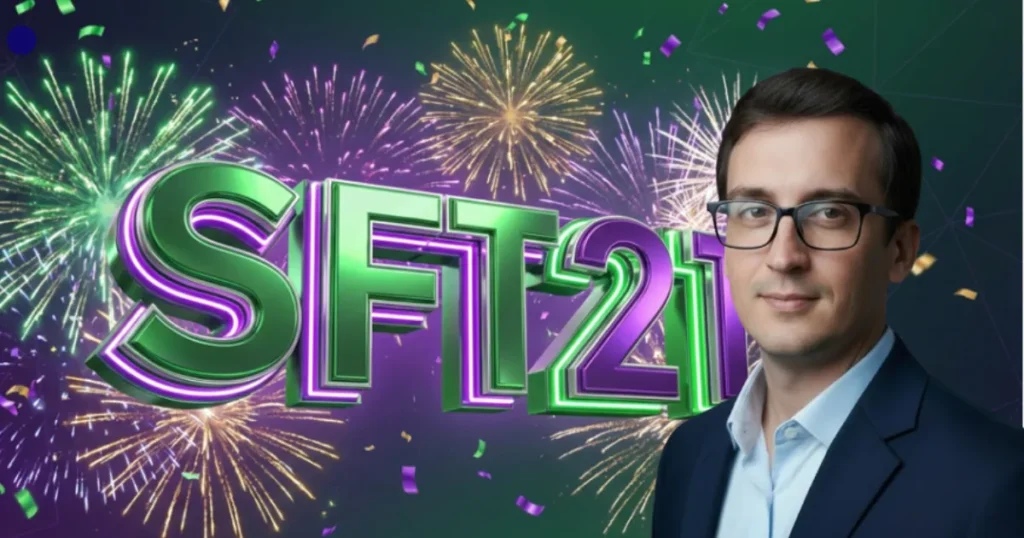
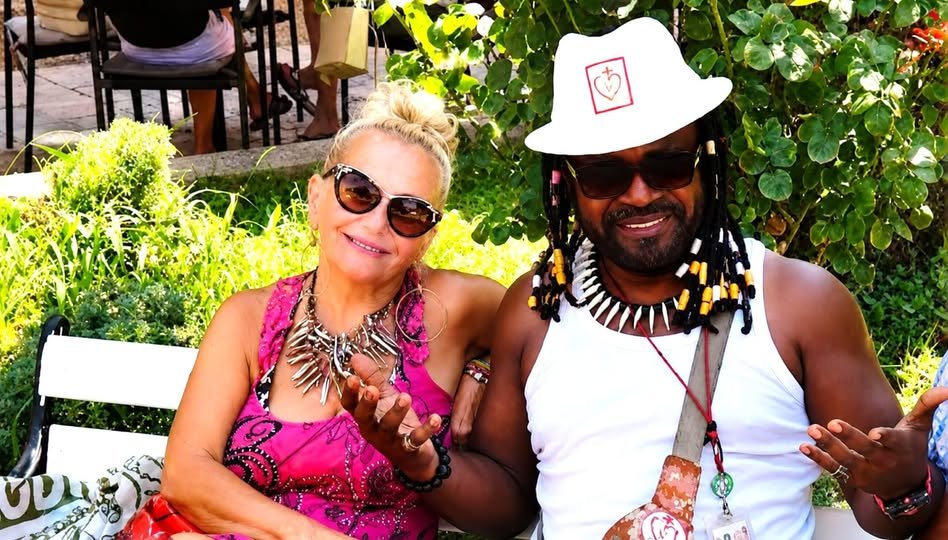
Dr. Hugues Pierre Ngatchou, widely known as Dr. Waka Waka or Prof. Pierre, recently became President for Global Development of SFT21.
In an exclusive interview conducted by Sanja Gloria Andrijić Marinović, SFT21 Director of Public Relations and Media, he talks about leadership, education, agriculture, technology, Africa, Europe—and why he decided to connect his own international mission with SFT21.
I recommend reading the full conversation.
Not because one interview proves where a developing project will ultimately go.
It does not.
But because when you are studying an early-stage business concept, understanding the people entering its structure matters too.
Leadership Before Business
One of the first things that stood out to me in the Dr. Waka Waka SFT21 interview was his definition of leadership.
He does not begin with titles.
Or authority.
Or how many people report to you.
He talks about service.
Listening.
Helping people grow.
Building communities.
One sentence captures his philosophy particularly well:
“Leadership is not about how high you go, but about how much you lift others.”
I find that relevant in the context of SFT21.
A project that wants to connect entrepreneurs, producers, customers, communities and international partners needs more than recognizable names attached to it.
The bigger question is:
How do those people think about leadership and responsibility?
Dr. Waka Waka speaks repeatedly about humility, service and creating opportunities for other people.
That tells us something about the perspective he is bringing into his new role.
Why Did He Choose SFT21?
For anyone currently observing the SFT21 Business Concept, this may be the most interesting part of the interview.
He explains that his connection with SFT21 began through Sanja Gloria Andrijić Marinović.
But he did not describe his decision as simply accepting an invitation.
He says he took time to research the project.
To understand its direction.
Its values.
What the organization is trying to build.
And what ultimately resonated with him was something very specific:
SFT21 puts people and values into the wider business conversation.
He particularly emphasizes love, service and human development.
Whether someone personally shares all of his philosophical or spiritual views is almost secondary to the point I find important here.
He wanted to understand what stood behind the project before accepting a major international role.
That is worth noticing.
It does not guarantee future success.
Execution still matters.
Technology still has to work.
Markets still have to respond.
But this is exactly the kind of context I want when studying a project before its wider launch.
Technology Should Serve Ordinary People
Another part of the interview connects directly with something I have been writing about for a long time.
Technology creates enormous value.
But too often, that value becomes concentrated inside the largest platforms.
Users create content.
Businesses pay for visibility.
Producers need access to markets.
Consumers generate data.
And the platform controls the infrastructure.
Dr. Waka Waka takes a different view.
He argues that technology should also work for farmers, students, entrepreneurs, families and local communities.
That immediately caught my attention.
Because one of the things that interests me about the SFT21 vision is not simply the idea of another app.
We already have enough apps.
The bigger idea is infrastructure.
A social layer.
An ecommerce layer.
Business tools.
Community.
Ways for producers, customers and entrepreneurs to connect inside the same broader ecosystem.
That is a much more interesting conversation than simply asking:
“What is the next social network?”
Agriculture Meets AI and Digital Infrastructure
Agriculture and technology may sound like two completely different subjects.
In the interview, Dr. Waka Waka connects them naturally.
A farmer needs more than land.
A producer needs access to markets.
Information.
Planning.
Transparency.
Education.
Customers.
Reliable partnerships.
He discusses AI as a tool for better planning and decision-making.
Blockchain as a possible tool for transparency.
Education as the layer that allows people to actually use technology effectively.
That matters because technology alone does not solve much.
Useful technology must connect with real human needs.
This is also where I see an interesting connection with ecommerce.
A small producer may have an excellent product.
But if nobody outside the local area can discover it, understand it or purchase it, the business remains limited by distribution.
Digital infrastructure can change that equation.
Africa and Europe: Not Charity, but Partnership
Another section I recommend reading carefully is his discussion about cooperation between Africa and Europe.
He identifies opportunities in:
- agribusiness and food security
- education and skills
- technology and digital transformation
- renewable energy
- partnerships with producers and entrepreneurs
But the most important idea may be underneath that list.
He does not present Africa simply as a market waiting for help.
He speaks about partnership and co-creation.
Different regions bring different resources.
Different knowledge.
Different markets.
Different strengths.
That is closer to the kind of global digital ecosystem I find interesting.
Not one centre controlling everything.
But infrastructure that can help different communities connect and create value together.
What Does This Interview Prove?
Nothing by itself.
And I think that is important to say.
An impressive interview does not prove that a company will execute every part of its vision.
A respected person joining a project does not guarantee business results.
A large international vision still has to become a functioning reality.
But an interview can answer other important questions.
Who is becoming involved?
Why?
How do they think?
What do they want to build?
What kind of leadership do they believe in?
Where do they see real-world applications for the technology?
For me, those questions matter—especially while the SFT21 Business Concept is still developing before its wider market launch.
Read the Full Dr. Waka Waka SFT21 Interview
I have only highlighted a few ideas that stood out to me.
The complete Dr. Waka Waka SFT21 interview goes much deeper.
He talks about his personal journey, faith, education, work with young people, humanitarian initiatives, agriculture, entrepreneurship, technology and his vision for stronger cooperation between continents.
And most importantly for people following SFT21:
he explains in his own words why he decided to become part of this project.
Do not take my summary as a substitute for the interview.
Read his answers.
Consider his reasoning.
Then form your own opinion.
👉 READ THE FULL EXCLUSIVE INTERVIEW ON THE OFFICIAL SFT21 PORTAL
https://www.sft21.com/sfnews_en.html#news-10https://www.sft21.com/sfnews_en.html#news-10
I will continue following these conversations and sharing the parts I believe deserve closer attention.
Because when you are studying something before it becomes obvious, information matters.
Context matters.
And the people helping shape the direction matter too.
Information first. Decision second.
If you want my SFT21 updates, explanations and observations delivered directly to your inbox, you are also welcome to join my newsletter.
📬 Want more tips like this?
Subscribe to get fresh blog posts directly to your inbox.